Sep 02 First Year Meadows
Over the past ten years, the Parks Foundation has planted meadows in several county parks, guided by recommendations from our Ecological Assessments and Action Plans. No two meadows have turned out the same, and that’s exactly what we expect. This natural variation is part of what makes meadows such valuable and resilient ecosystems. Even when two meadows are planted using the same method and seed mix, they will each take on a unique character from the very first year. Factors like soil type, moisture levels, sunlight, past land use and local wildlife activity all shape how a meadow develops. And while the transformation is rewarding, it’s important to understand that results don’t happen overnight.
While each of our meadows is unique, they all share three main goals:
- Provide new habitat for pollinators by planting a diverse mix of native wildflowers and grasses
- Conserve energy by reducing mowing, which saves time and money
- Improve stormwater management by using deep-rooted plants to help absorb and filter rainwater
These goals are the true measure of success for a meadow. Every bloom, buzzing insect and deep-rooted plant is helping to make the park healthier, more resilient and more enjoyable for both wildlife and park users.
A Look at a First-Year Meadow
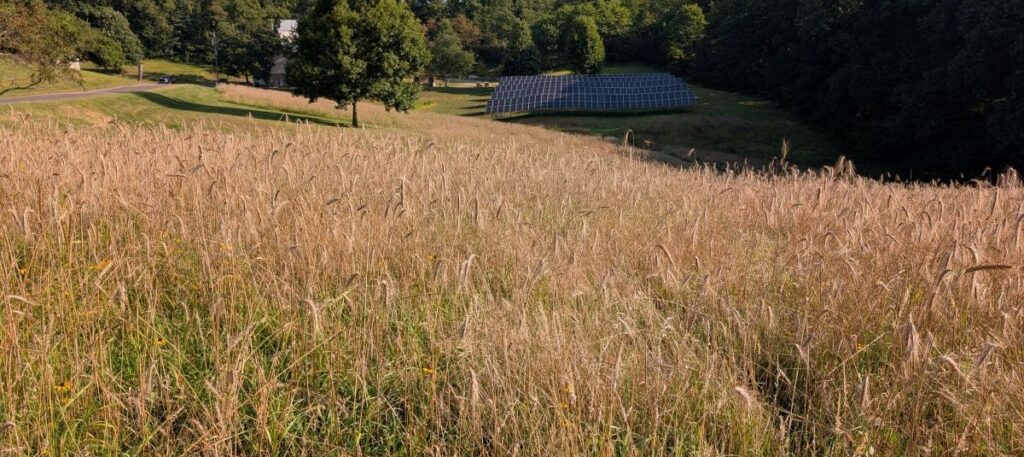
Last year, we planted the Deer Lakes Barn Solar Meadow and this summer we’re getting our first glimpse of how it is coming to life! While meadows can take several years to fully establish, their transformation begins right away, both above and below the surface.
A first-year meadow will look more like a patchy, grassy field than a dense wildflower showcase. That’s normal because many native plants prioritize root growth over flowering in their first season. These deep, resilient roots are what allow them to thrive long-term, resist drought and outcompete invasives over time. Even though a first-year meadow might not look like a postcard-perfect field of flowers yet, as long as it’s working toward the goals we outlined above, it’s doing its job. You might see a few early blooms, but the full color and diversity you’re envisioning usually doesn’t appear until the second or third year. This is exactly what we are seeing at the new meadow in Deer Lakes Park.
Four Key Species in a First-Year Meadow
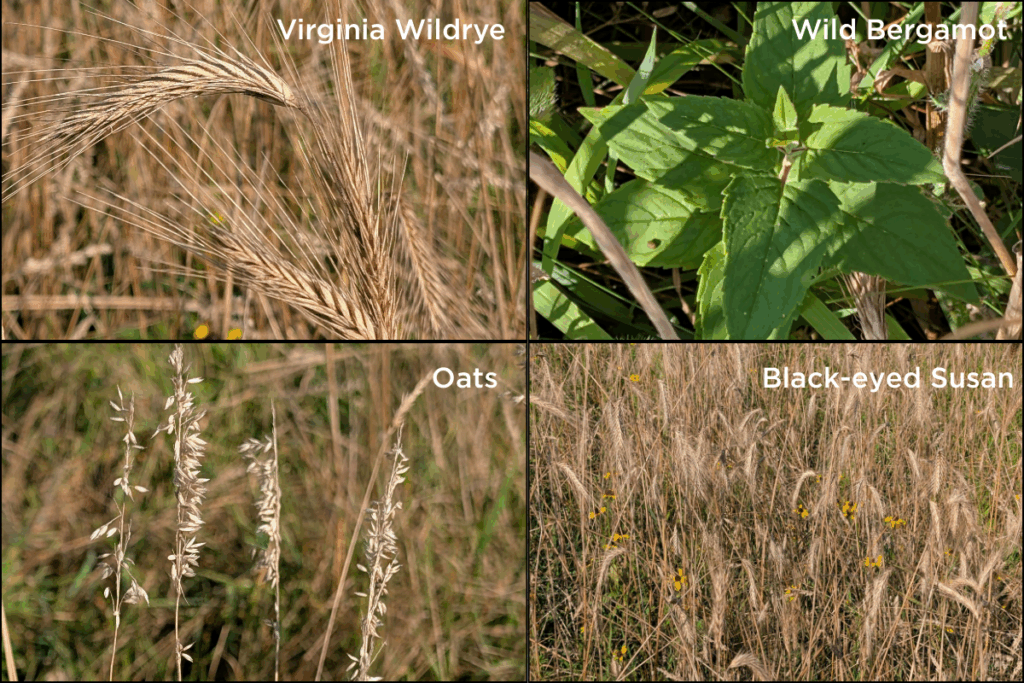
When examining a meadow after it has been seeded, you should be looking for indicator species. These indicator species tell us about the success, challenges or failure of a meadow planting. Ernst Seeds advises us to look for four primary species to assess early-stage germination in our meadows:
- Cover Crop (Oats or Rye) – These large-seeded grasses act as a nurse crop and are often the first green you’ll see. If they’re growing well, it’s a good sign that the site isn’t suffering from issues like herbicide residue.
- Virginia Wildrye – Another large-seeded native grass that serves as an early indicator for successful grass germination.
- Wild Bergamot (Monarda fistulosa) – A small-seeded wildflower. Its presence indicates that wildflower seeds weren’t planted too deep and that soil conditions are favorable. Wild Bergamot is also known as bee balm, horse-mint or simply monarda. It has striking, lavender-pink flowers shaped like a firework and a pleasing aroma. Monarda is beloved by hummingbirds, bees and butterflies, making it an ideal meadow plant and it’s a great sign of a meadow that’s building biodiversity. Look for its signature frilly blooms and square stems, which are traits common to the mint family.
- Black-eyed Susan (Rudbeckia hirta) – Like Bergamot, this is a small-seeded broadleaf species. Its growth signals a good start for the wildflower component of a meadow. This sunny flower is a familiar sight to many and a classic meadow plant with golden-yellow petals, dark central cones and hairy leaves. It’s also known to be a strong self-seeder and is ideal for our meadows because it is drought tolerant. Black-eyed Susan play an important role in attracting pollinators like butterflies, bees and moths and provide food for birds in the fall. You can often find them standing tall above the grasses, with their golden petals catching the light.
Some other species you might see in our meadow mixes are Lanceleaf Coreopsis, Oxeye Sunflower, Partridge Pea and Purple Coneflower. Each of these offers beautiful flowers that pollinators use and that humans love to look at. Together, all these species tell a story: if both grass and wildflower representatives are emerging, your meadow is on track. We are fortunate at Deer Lakes Park to be seeing each of these indicator species this year, which tells us that our planting was successful and should accomplish the goals we outlined above.
Making Your Own Meadow
Thinking about starting a meadow of your own? You can use the information above as a guide for selecting species and knowing what to look for in the first year. By choosing a mix of native grasses and wildflowers and monitoring for early indicator species, you’ll set your meadow up for long-term success. For more step-by-step instructions, check out our Meadow Planting Guide.
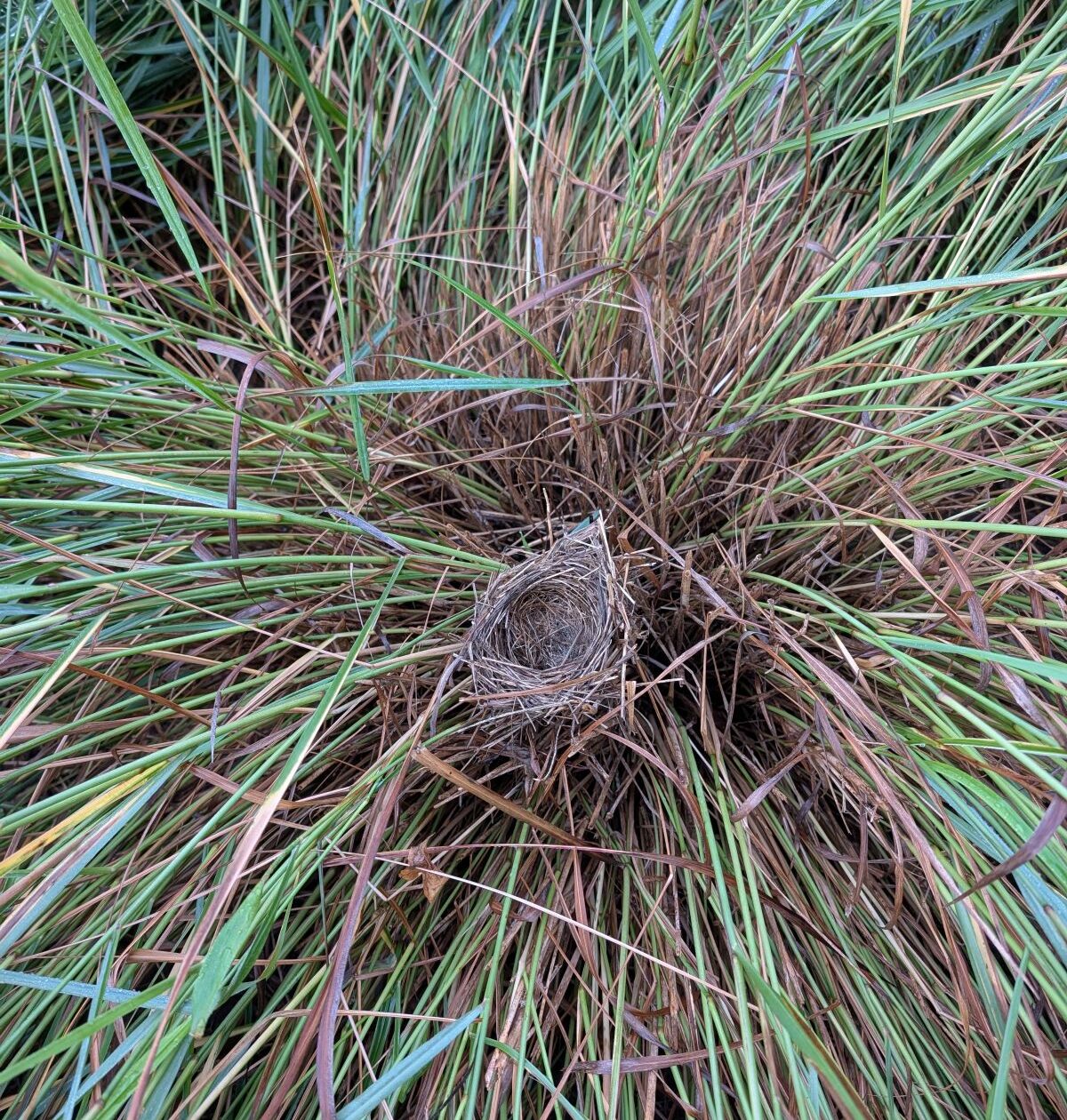
Tip: Follow the Mow–Meadow–March rule. Mow your meadow only once each year in March. This annual mow removes dead plant material, allows sunlight to reach the soil, prevents trees from taking root and gives new seedlings room to grow without disturbing wildlife during the rest of the year. Some choose to only mow part of their meadows in the spring, rotating sections each year, to allow insects which have wintered over in the meadow to hatch without disturbance. It is vital to mow before birds begin nesting, like the picture shown here of a nest from a meadow in Hartwood Acres Park. Mowing in March is one thing we wish we could have done this year at Deer Lakes, but were not able to due to the wet weather conditions in March. By the time it was dry enough to mow, birds had already began nesting and we had to decide to skip this step to ensure that the ecosystem was not disturbed. This is a great example of the resiliency of a meadow and how we can adapt best-practices with real-life limitations.
Conclusion
We can’t wait to watch the Deer Lakes Barn Solar Meadow grow into its full potential. In the coming years, as more perennials take hold and the diversity of blooms increases, this once-empty field will become a thriving habitat for pollinators, birds and countless other forms of wildlife. Knowing that we have the indicator species we should, it also gives us the confidence that the meadow is attracting pollinators, providing vital habitat, managing stormwater, decreasing maintenance like mowing and providing a tranquil spot for enjoying the park.
You can plan a visit to see how Deer Lakes Meadow looks during its first-year and to see if you can find all these species we identified. To visit, you must walk along the White Trail and you can access the meadow from there. There is no visitor parking at the site of the meadow, it is an access road only.
We are lucky to continue watching the other meadows we have planted over the years grow and evolve, each telling its own story. Just recently, we planted a meadow in Round Hill park and we will be looking for these same indicators of success next summer in its first year. These spaces remind us that working with nature takes time, but the rewards are worth the wait. We hope you’ll visit them soon and return next year, when we’ll explore what a second-year meadow has to offer.