Oct 13 Nine Oaks to Look For in Your County Parks
Fall is a great time to explore the Allegheny County Parks! The leaves are changing, the air is getting crisp and the forest floor is beginning to fill with one of the season’s most recognizable treasures: acorns.
Acorns are the nuts of oak trees and while each species of oak produces a different-looking acorn, they all have a hard shell and a cap. The nine Allegheny County Parks are home to many different types of oak trees, each with its own unique characteristics. This fall, we’re taking a closer look at nine different oaks, one from each park. From the enormous acorns of the bur oak to the tiny acorns of the willow oak, you’ll find plenty of variety in their shapes, sizes and distinctive caps.
Fun Fact: An acorn’s cap is also called a cup or cupule. The botanical term cupule refers to the cup-like structure that covers the base of the acorn.
Harrison Hills Park | Bur Oak
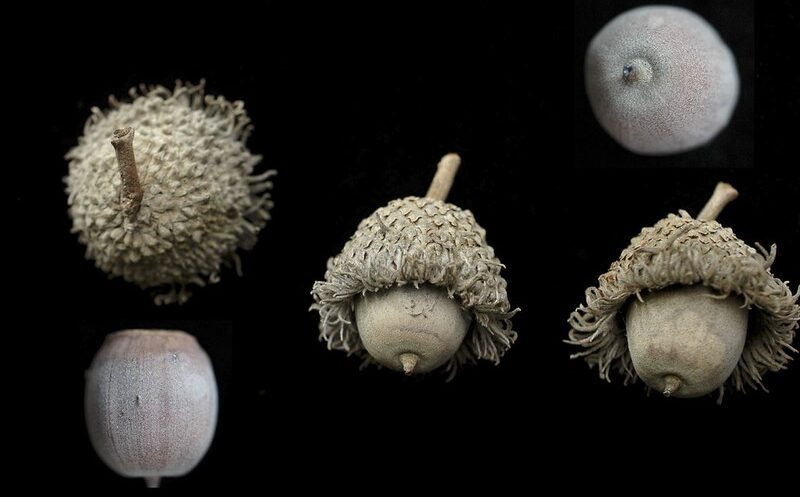
Our acorn adventure begins at Harrison Hills Park, where bur oaks can be found around the overlook parking lot. The bur oak (Quercus macrocarpa) produces the largest acorns of any native oak. Its scientific name can even help us identify it, since macrocarpa means “large-fruited.”
The acorns are hard to miss, but the cup is what makes them especially fun to identify. Bur oak acorn cups have a distinctive, shaggy fringe that almost looks like a fuzzy collar around the nut.
Hartwood Acres Park | Chestnut Oak
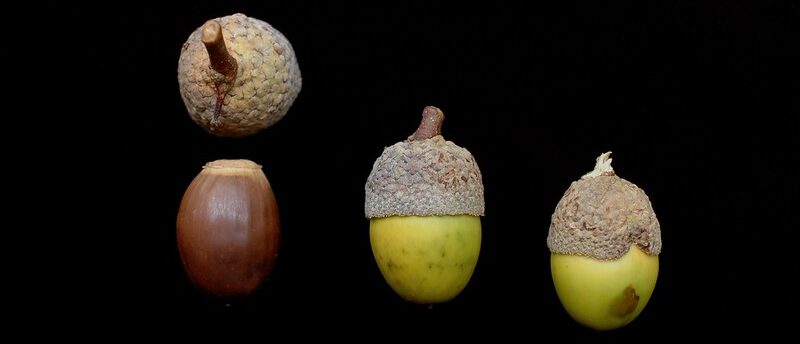
At Hartwood Acres Park, head to the Purple Trail above the stables to look for large chestnut oaks. The chestnut oak (Quercus montana) produces long, oval-shaped acorns with a bumpy cup that looks a bit like a fuzzy hat. The acorns can also have a slightly wrinkled appearance.
The chestnut oak is known for having the thickest bark of any oak tree in North America.
Deer Lakes Park | Sawtooth Oak
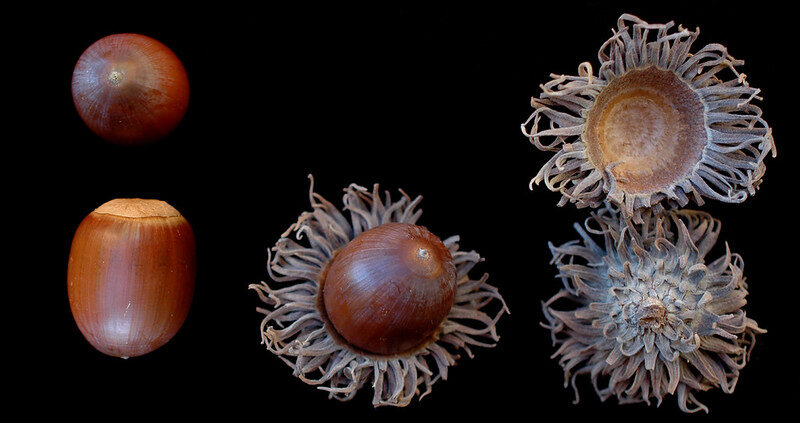
When visiting Deer Lakes Park, look for a large sawtooth oak in the Barn Solar Meadow. Sawtooth oak (Quercus acutissima) is not native to Pennsylvania, but its acorns are certainly interesting. The cup is covered with long, leaf-like bristles that give it a shaggy, almost hairy appearance.
The sawtooth oak gets its name from its sharply serrated, saw-like leaves.
North Park | Swamp White Oak
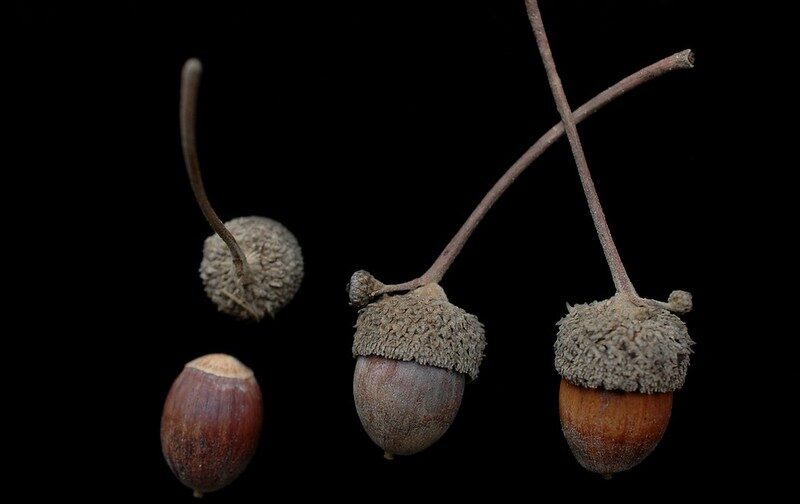
North Park is home to large swamp white oaks around Flagstaff Hill. Swamp white oak (Quercus bicolor) is part of the white oak group and its acorns have a distinctive feature that makes them easier to spot: they hang from relatively long stems called peduncles.
Their cups are bumpy, or warty and often fuzzy. Compare a swamp white oak acorn with a white oak acorn and you may notice that the longer stem is one of the easiest ways to tell them apart.
South Park | Northern Red Oak
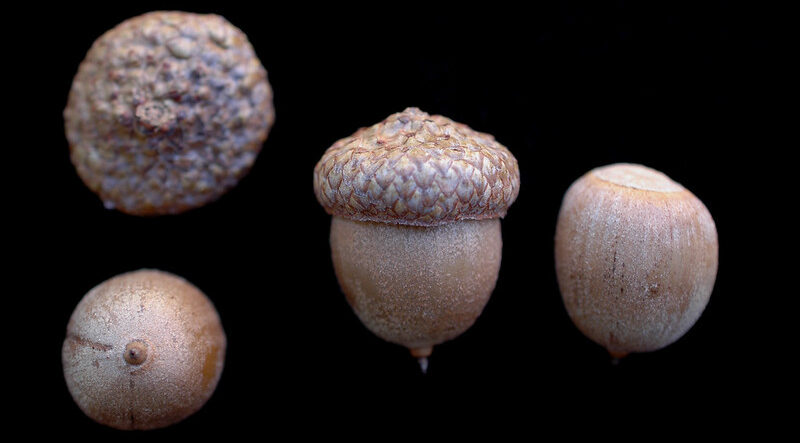
Around the Cascades in South Park, keep an eye out for northern red oaks and their classic-looking acorns. Northern red oak (Quercus rubra) produces a large, rounded nut topped with a shallow cup that covers only about a quarter of the acorn. The shape has been compared to a little beret sitting on top of a round head.
It takes the northern red oak two growing seasons to mature, unlike white oak acorns, which mature in a single growing season.
Boyce Park | Willow Oak
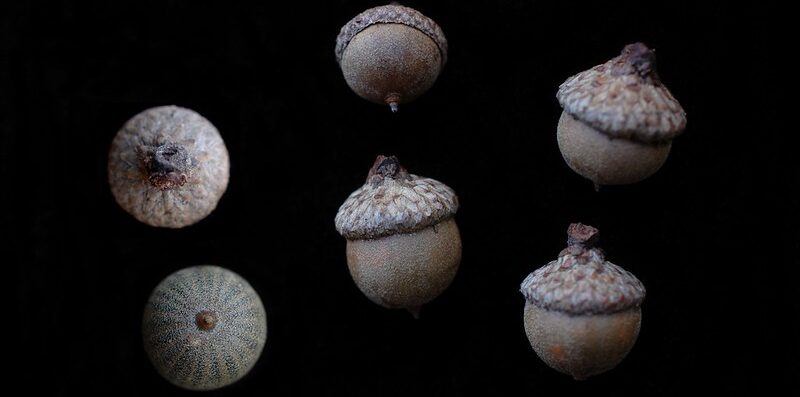
Between the Parks Foundation offices at the Boyce Park Administration Building and the Nature Center, look for willow oak. Willow oak’s (Quercus phellos) long, narrow leaves resemble those of a willow tree, while their small, rounded acorns sit in shallow, saucer-like cups.
Willow oaks are more often found in the south, where warmer temperatures and a longer growing season suit them well. Pennsylvania is near the northern edge of their natural range, making the willow oaks at Boyce Park a less common tree to spot on your fall walk.
Round Hill Park | Pin Oak
Around the farm at Round Hill Park, look for pin oak trees. Pin oak (Quercus palustris) produces small, rounded acorns with a relatively flat cup. The acorns can be dark with subtle vertical striping, making them another fun one to compare with the other oaks.
Pin oak acorns are a favorite of the blue jay, who are known to swarm the trees once the acorns are ripe enough to eat.
White Oak Park | White Oak
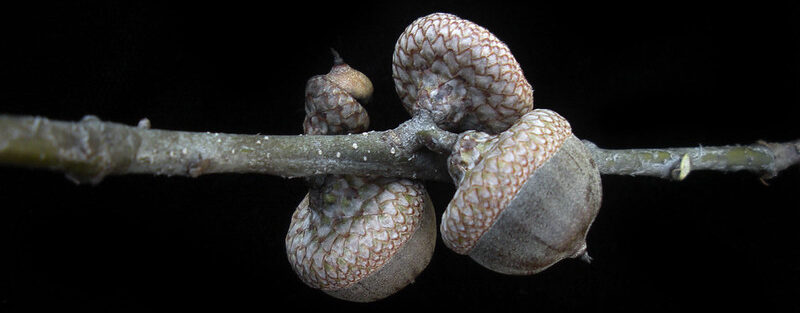
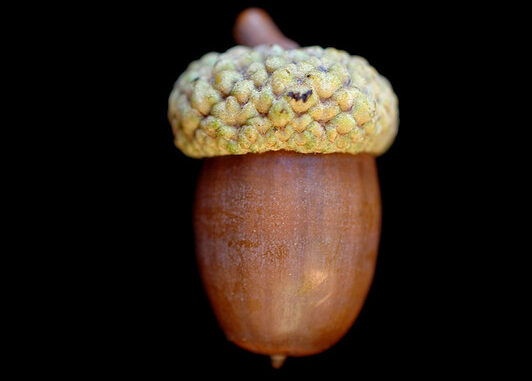
Of course, we couldn’t leave out the tree that gives White Oak Park its name. White oak (Quercus alba) produces long acorns with a bumpy cap. They can look similar to swamp white oak acorns, but the stem connecting the acorn to the branch is generally much shorter. On your next visit to White Oak Park you can look for them across from the dog park.
White oaks can live for more than 600 years, making these trees part of the landscape for generations and a reliable source of food and habitat for wildlife.
Settlers Cabin Park | Scarlet Oak
Finally, head to Settlers Cabin Park and keep an eye out for scarlet oak along the red trail. Scarlet oak (Quercus coccinea) is a member of Pennsylvania’s red oak group and is especially well known for its brilliant fall colors.
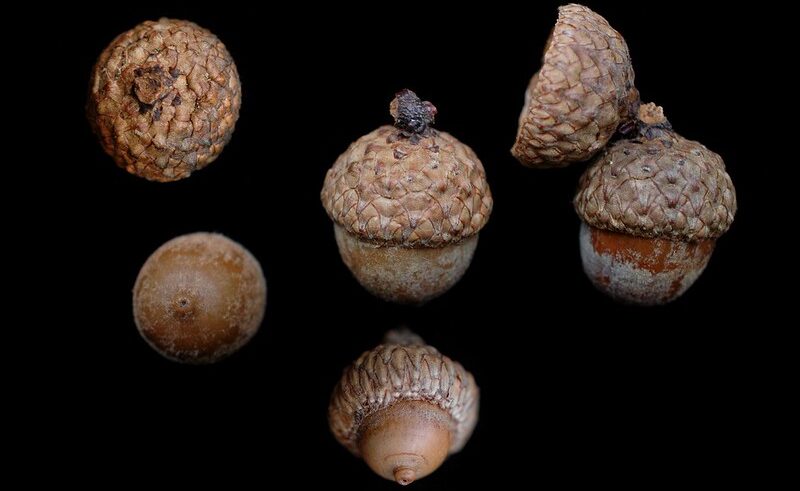
Its acorns are also among the most distinctive to identify because they look so similar to the black oak. The acorn cup is deep and shaggy, with overlapping scales that give it a shingle-like appearance. Look closely at the tip of the nut, too, where you may notice distinctive concentric rings to help identification.
This fall, slow down on your next walk through the Allegheny County Parks and take a closer look at what’s beneath your feet. See if you can find all nine of these oak species to compare their acorns. You can even keep an eye out from year to year. Some years, oak trees produce an abundance of acorns, while other years bring a much smaller crop. This natural variation is known as masting and can have a big impact on the wildlife that depend on acorns as a food source.
These nine oaks are just a small sampling of the many types of oaks found throughout the Allegheny County Parks. The next time you spot an acorn along the trail, take a closer look. You might be able to figure out which oak tree it came from. Happy acorn hunting!